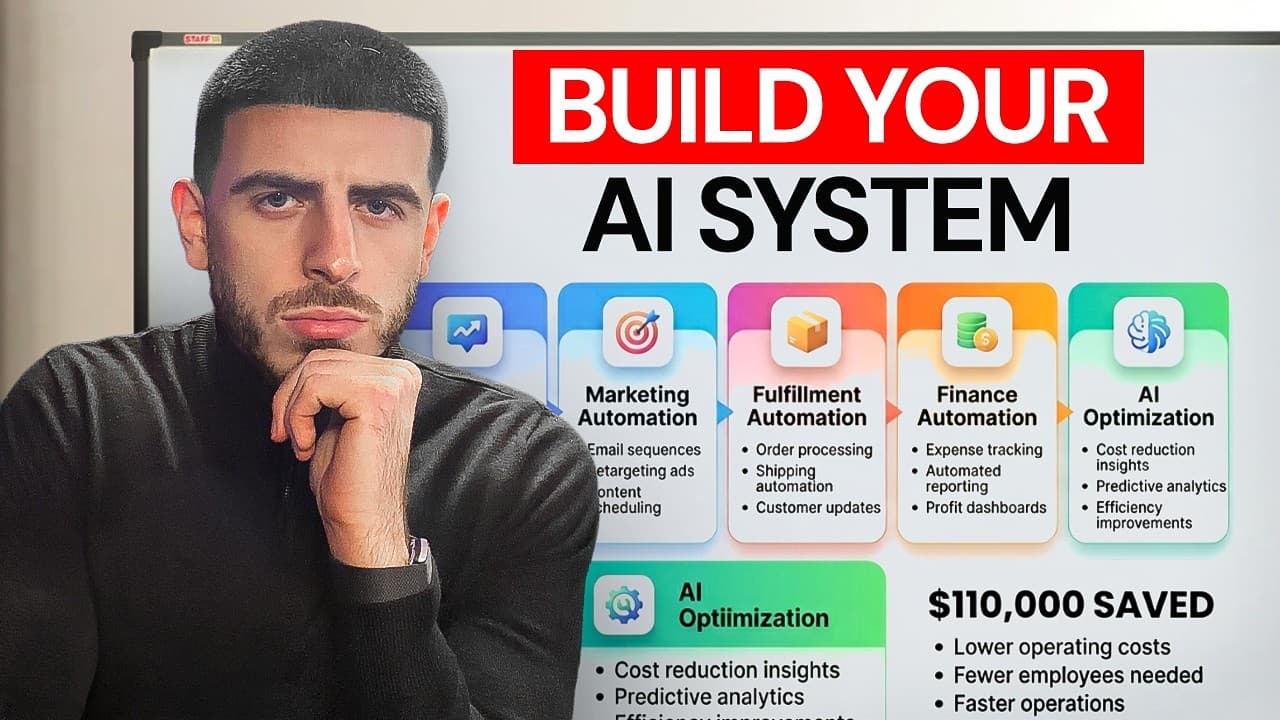
The £110k Hiding in Your Own Data: a Live AI Opportunity Audit in Recruitment

Kaiyan Ali
Founder at Montaj Digital

Kaiyan Ali
Founder at Montaj Digital
I'm Kaiyan, founder of Montaj Digital. I help professional service firms put AI and automation to work, so their people spend less time on admin and more on the work only humans can do. I've trained 250+ professionals at our AI Week, and I'm on a mission to help a million service firms do the same.
Follow me for more contentMost owners treat growth as a traffic problem. Hire another consultant, run more ads, buy a bigger data list. It feels like progress because it feels like effort. It's also the most expensive place to look.
The most valuable commercial asset most firms own is the data they already have and never look at. The connections in your LinkedIn, the threads sitting in your inbox, the contacts going stale in your CRM. You paid to build all of it. Most of it is doing nothing.
A few weeks ago I sat down with the founder of GRS Global, a freight-forwarding recruitment firm in London, and ran a live audit of exactly that. One workflow, their own data, no new leads. The analysis came back with £110k of pipeline they'd forgotten they were sitting on. This is the whole audit: what we found, what it cost to fix, and how you can run the same pass on your own business before you spend a penny on new leads or new hires. The full named story, including the custom tool we went on to build them, is in the GRS Global case study.
If you'd rather watch than read, the full audit is embedded below.
What a live AI audit actually is
An AI audit isn't a sales pitch with a slide about robots. It's a structured teardown of how a business actually spends its week, followed by a map of which of those tasks a machine can do better, cheaper, or faster.
We went through this firm line by line: candidate sourcing, outreach, CV formatting, placements, invoicing, the lot. The pattern was the one we find in almost every service business we look at. Between 30 and 40% of the week was going on admin that had nothing to do with what the team is actually good at, which is talking to people and placing them.
The method behind the headline number is worth stating plainly, because it's the part you can copy:
- Pull the data you already own: your LinkedIn export, your inbox, your CRM.
- Run it through an AI model with clear instructions about what a good opportunity looks like for you.
- Let it surface and rank the opportunities you've forgotten or never noticed.
- Re-engage the top of that list yourself, as a human.
That's it. No new pipeline bought, no cold list, no new tool you have to learn from scratch.
The £110k hiding in data they already owned
The first thing we did was point AI at the founder's LinkedIn network. You can request your own data through LinkedIn's Data and Privacy settings, then run the export through a model with a prompt that knows your ideal client and the placements you want. It reads the whole network and hands back the commercial opportunities sitting inside it.
The founder's reaction was the honest one. It blew his mind how much information LinkedIn quietly stores, and more so what AI could do with it. When we ran the analysis, the tool estimated it could generate around £110,000 in revenue from following the opportunities it had found.
I want to be precise about that figure, because precision is the difference between a useful case study and a lie. The £110k is identified pipeline: opportunities the data surfaced and the firm has started working, not money already in the bank. It's a projection off their own network, not a receipt. That still makes it the cheapest pipeline they'll ever generate, because every one of those relationships already exists.
The CRM told the same story from a different angle. There were roughly 180 candidates sitting in the database, most of whom hadn't been contacted in over a year. That's not a dead list. It's a room full of warm relationships that went cold through nothing more than a busy week repeated fifty times.
Where 30 to 40% of the week was really going
Once you go looking, the admin drains aren't hard to find. Here is what the audit surfaced, and the AI fix for each.
- CV formatting, 5+ hours a week. Done by hand at 10 to 15 minutes per CV, across 10 to 20 CVs a week. The AI fix: a trained formatting step, so you paste in a rough CV and get a clean, on-brand one back.
- Outreach, 80 to 120 messages a week. Sent manually, one profile at a time. The AI fix: a structured outreach sequence that runs in the background.
- Placements and commission. Tracked and worked out on an Excel sheet. The AI fix: pulled straight from the CRM into a daily summary.
- A cold database of around 180 candidates. Searched by hand when a role came in. The AI fix: scored and matched automatically against each new vacancy.
The finding that surprised me most wasn't any of those. It was that the firm was about to hire someone on a £40,000 salary, closer to £50,000 all in once you add National Insurance and onboarding, to do work we could see was mostly automatable. We went through the job description line by line, and around 80% of it could be handled right now for under £400 a month in software.
That's the real cost of ignoring your own admin. It doesn't just eat hours. It talks you into hiring a person to do a job a system could do for the price of a couple of lunches.
The five AI moves that changed the maths
You don't need all of this on day one. These are the five moves, in the order I'd run them, that turn an audit into money and time back.
1. Mine the data you already own
This is the £110k play, and it's first for a reason: it's the fastest route to revenue because the relationships already exist. Export your LinkedIn, connect your inbox, sweep the CRM, and run all three through AI to surface the opportunities gone cold. We go deep on the LinkedIn side of this in the six figures hiding in your LinkedIn data.
2. Score candidates instead of skim-reading them
Most recruiters read CVs by eye and hope. Build a simple scoring matrix for each role, what good and bad actually look like on experience, attitude and salary, then let AI cross-reference your whole database against it. You stop sending fifteen decent candidates and start sending five hyper-relevant ones. Better for the client, better for your reputation, and far less time spent searching.
3. Turn CV formatting into a one-click job
CV formatting was five hours a week. You can teach an AI model exactly how your CVs should look: the structure, the length, always a one-pager, what to keep and what to cut. Then the input is a rough CV and the output is a finished one. Five hours a week back is twenty hours a month. As the founder put it, that's a full round of golf every week you can play without the guilt.
4. Give the business a second brain
A second brain is a set of files that teach AI your brand, your voice, your ideal client, and the way you actually work. Once it exists, everything downstream gets faster and more consistent: outreach, candidate one-pagers, social content, follow-ups. It's the difference between prompting a stranger every time and briefing someone who already knows the business.
5. Re-engage the inbox that has gone cold
Your inbox is a graveyard of half-finished conversations. Point AI at it with a clear picture of your dream client and ask what opportunities you missed. Another recruitment firm we showed this exact play to signed around £60,000 in deals off the back of it, plus a group partnership, because the person they'd originally spoken to had since moved to a bigger company. That £60k is signed, not projected. It's the safer number, and it tells you the method banks real money, not just estimates.
Why this matters beyond recruitment
None of this is really about recruitment. Swap the words and it's every service business I meet.
You have a team spending too much of the week on admin that should be spent on billable work, on generating revenue, or on pushing the business forward. In a service business your utilisation, the share of your team's time on work you can bill for, is everything. Move ten hours a week off admin and onto client work and you haven't just saved time, you've changed what your team is worth.
I don't think AI should be replacing loads of jobs. I think it should be increasing the revenue per head of the people you already have. That's the reframe that matters: your team amplified with AI, not replaced by it. And when you replace a £50,000 admin hire with a £5,000-a-year stack of software, you're trading a physical cost for a fraction of the cost that doesn't take a sick day, hand in its notice, or need onboarding. If you want the full arithmetic on that, we broke it down in the true cost of an employee.
How to run this audit on your own business
You can start this yourself this week. In order:
- Export your LinkedIn data from Data and Privacy, and get a clean copy of your CRM contacts.
- Write down, in plain English, what your ideal client and best opportunity look like.
- Run the data through an AI model with that description and ask it to surface and rank the opportunities you've missed.
- Pick the top ten. Re-engage them yourself, as a person, not a bot.
One honest caveat before you start. An audit tells you what to automate. It doesn't tell you whether your business is ready to automate at all. Point AI at messy data or a broken process and you just speed up the mess. If you're not sure where you stand, book a call with us and we'll tell you where to start: tidy the data, start automating, or fix the workflow first. We also cover this in why your business isn't ready for AI yet.
Final words
The instinct when you want to grow is to go and find something new. New leads, new tools, new hires. The audit keeps proving the opposite. The cheapest revenue in your business is the relationships you already have and the hours you're already paying for.
That freight-forwarding firm didn't need a bigger network or another salaried body. They needed to look properly at what was already theirs, and let AI do the reading. £110k of pipeline was sitting in plain sight. Twenty hours a month was going on work a machine could do.
You almost certainly have your own version of that number. The only question is whether you go and find it.
If you want us to run this audit on your business, we offer a free AI implementation audit: a structured session where we take your real workflows and hand you a prioritised list of the three to five things we'd automate first. You walk away with the map whether you work with us or not. Book your free AI audit here.
Got Any Questions? We have the answers.
If your question is not answered here, book a FREE AI readiness call and we can discuss it in detail.
An AI opportunity audit is a structured review of how a business spends its week, followed by a map of which tasks AI or automation could do better, cheaper, or faster. It looks at the data you already own, your admin drains, and your workflows, then gives you a prioritised shortlist of what to automate first. The output is a plan, not a sales pitch.


Learn with our resources
Stay informed with Our Latest InSights

Why Your Paid Ads Aren't Working: 5 Reasons They Fail for Financial Services Firms
If you've run paid ads for your financial services firm and they didn't land, the ads probably weren't the problem. Most agencies treat a firm closing £20k to £100k engagements like an e-commerce brand selling a £50 product, so they target the wrong way, send traffic to the wrong place, and report on numbers that don't matter. Here are the five reasons paid ads fail for regulated, high-ticket firms, and the fix for each: your creative is now your targeting, cold traffic needs a lead capture not a homepage, follow-up has to happen in minutes, a safe offer is an invisible one, and vanity metrics hide where your system is actually breaking.
Read more
How to Map Your AI & Automation Workflows
You can't automate a bad workflow. AI is only as good as the process you point it at, so the work that pays off happens before you touch a single tool: mapping what actually happens, step by step. This piece walks through how we do it, systems thinking over task thinking, the five whys to find the real cause of a broken process, six simple blocks for drawing any workflow, and a way to decide which tasks AI should run, assist with, or stay out of.
Read more
Why AI Isn't Optional Anymore: How to Stand Out in a World of AI
AI is not coming; it is already here, and it is already replacing tasks inside your job rather than the job itself. The wrong question is “will AI take my job?”. The right one is “which parts of my work are easy to replace, and how do I make myself valuable around them?”. Here is what still makes you stand out, and five frameworks to future-proof your work.
Read more
What to Automate First: The 5-Question Test We Run Before Touching a Workflow
Most businesses automate whatever felt annoying that week, and end up speeding up a mess. Before we touch a single workflow for a client, we score it on five weighted questions: time saved, revenue impact, error and quality risk, how repetitive it is, and how feasible it is to build. That gives a score out of 85 and a simple traffic light: 70 or more, automate now; 40 to 69, plan it; under 40, leave it. One reporting task scored 77 and handed my agency back eight billable hours a month.
Read more
The AI Toolkit: Which AI Tools to Use in Your Business, and When
Stop asking which AI tool is best and start asking which tool for which job. An AI tool is a tool (brilliant at some things, useless at others), so you hire it for a defined job rather than collecting subscriptions. Sort every tool into six buckets (everyday AI, search and synthesis, a creative studio, autonomous agents, smart assets, and automation), hold one per bucket, and you've covered most of what a business does day to day.
Read more
How to Become an AI-First Company: a 5-Step Framework
Most businesses don't have an AI strategy. They have a few people using ChatGPT when they remember, a pile of subscriptions that don't talk to each other, and no way of knowing whether any of it's working. That's an AI-using company. An AI-first company is different: every tool has a clear job, an owner and a success metric, the knowledge is packaged so it plugs into any model, and improvement is actually measured. This is the five-step framework I use to close that gap: strategy, workflows, tools, knowledge and adoption.
Read more