




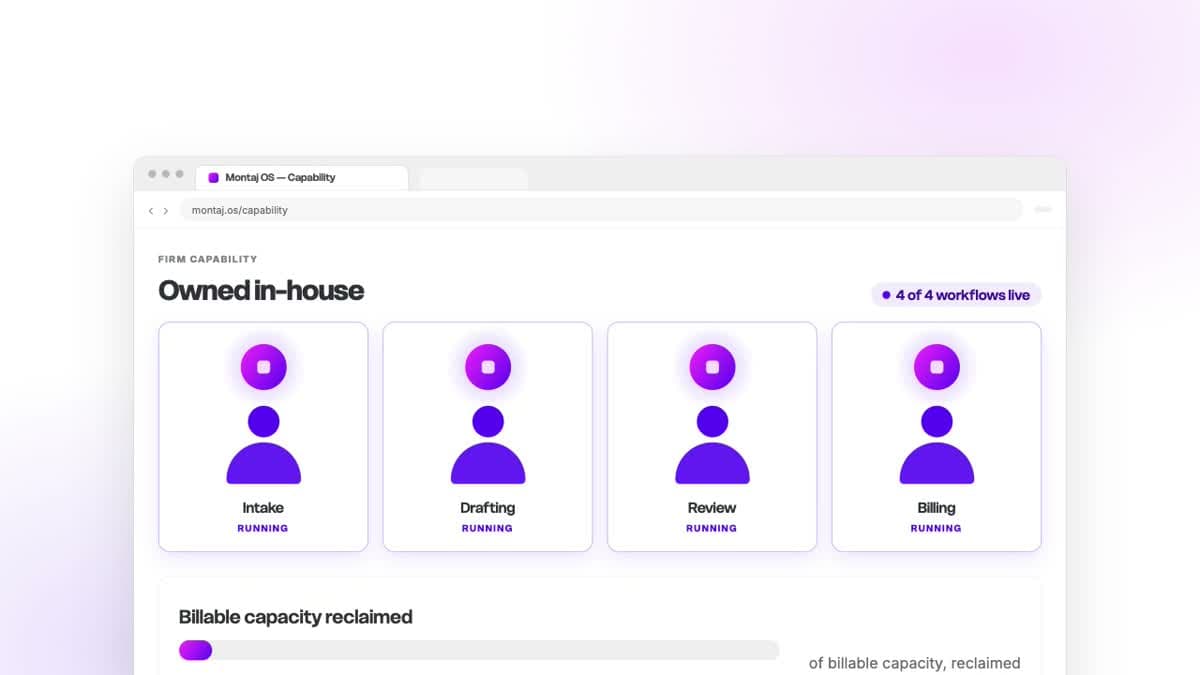
Capability the business owns
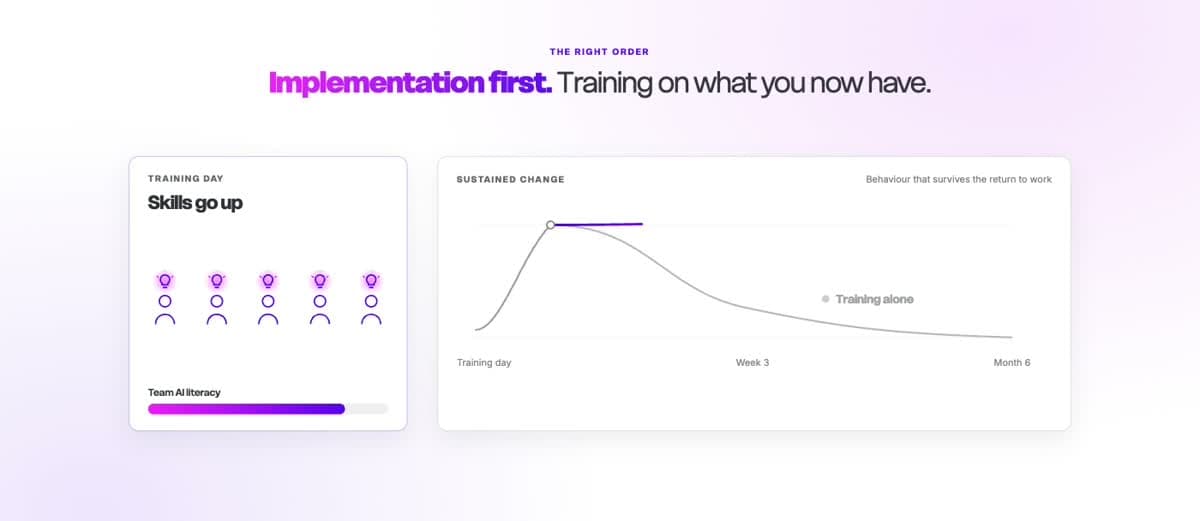
Your team learns how to judge outputs and use the tools. Those skills can carry into other workflows, provided people get time to practise.
 Reviewed on
Both have a place. The right starting point depends on what is stopping your team today.
 Your team is technically capable and wants to put AI to work.You've identified specific tools they need to use more effectively.You want to build internal capability over time.Systems are already in place and adoption is the bottleneck.Your team hasn't got capacity to apply training alongside existing work.You need a working system within an agreed timeframe.Previous training hasn't led to lasting changes in how people work.The team needs to see AI working in its own processes before adopting it.
We run training ourselves. For some businesses, a training day is the right first step; for others, it works best alongside implementation.
Your team learns how to judge outputs and use the tools. Those skills can carry into other workflows, provided people get time to practise.
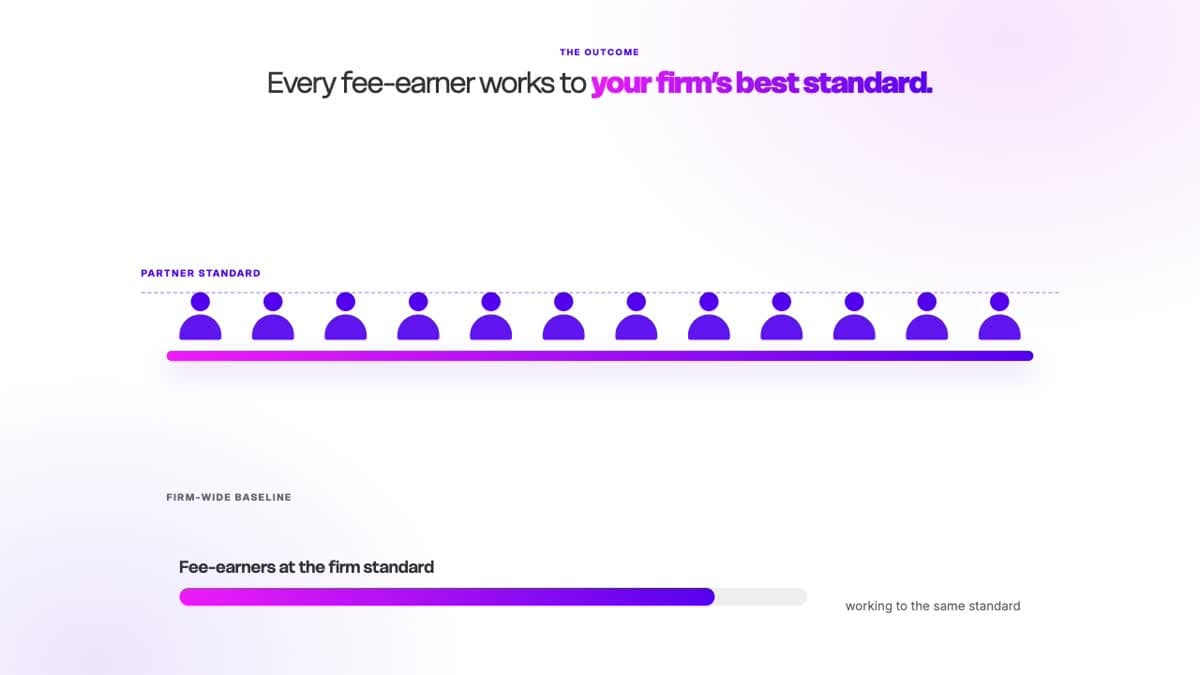
A team session gives people a common understanding of what AI can do, where it makes mistakes and how to check its work.
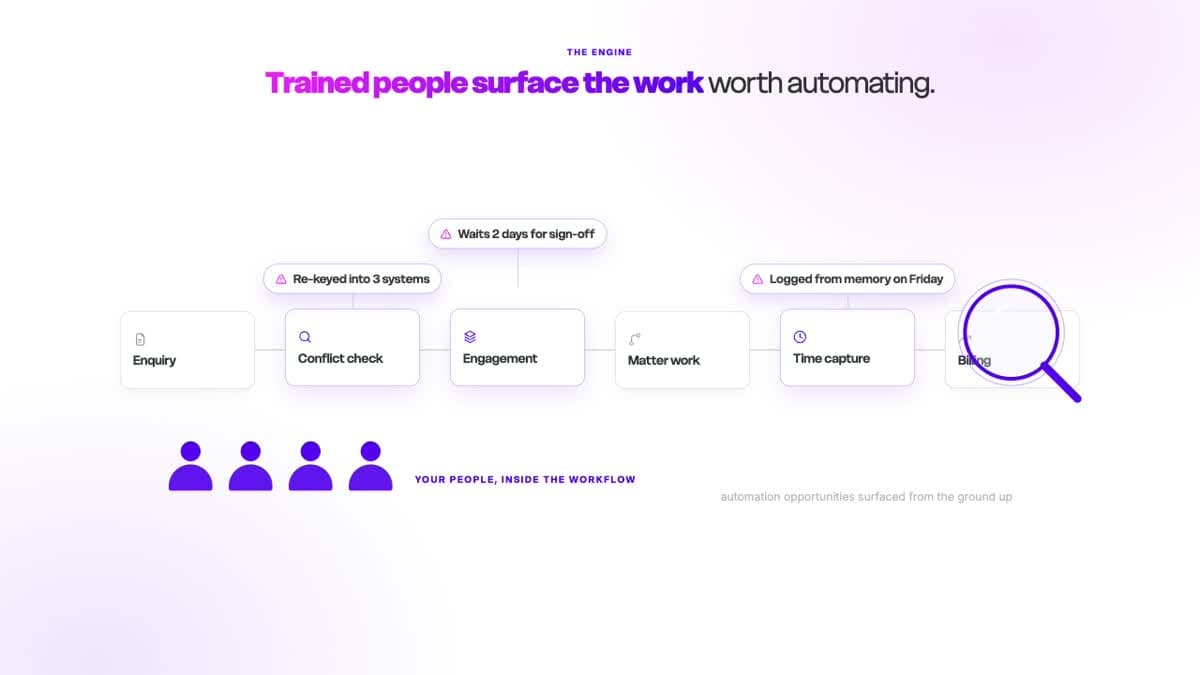
People doing the work spot problems an outsider may miss. Training helps them turn those observations into practical ideas.
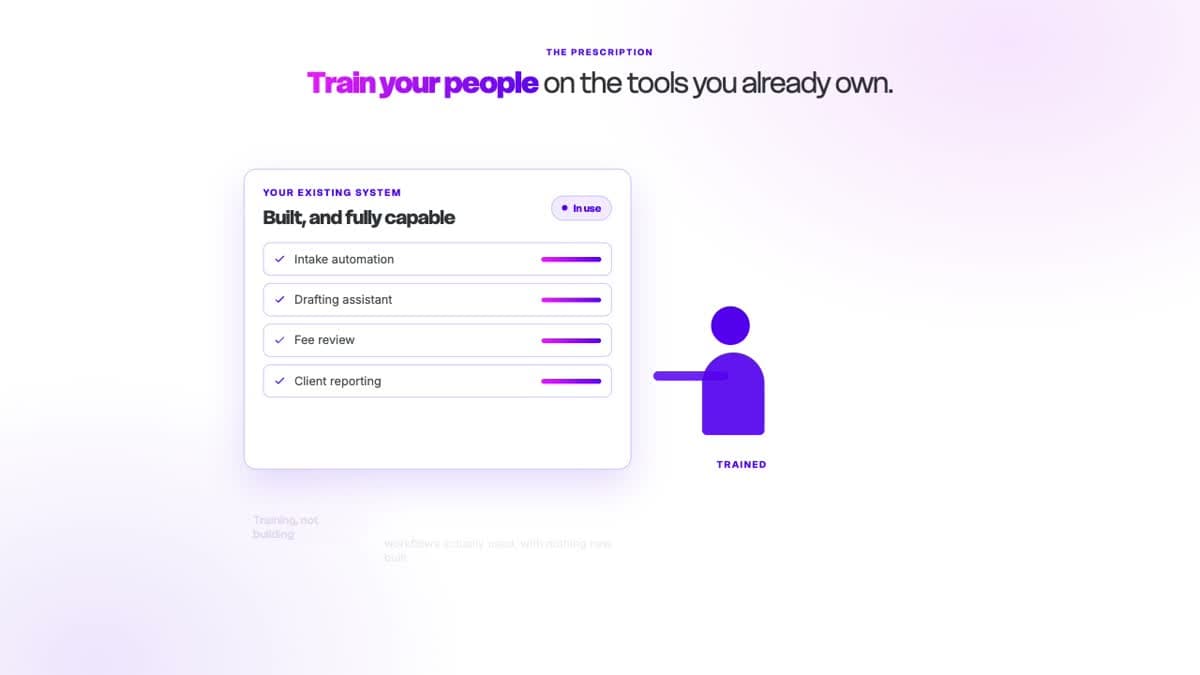
If useful systems already exist but nobody uses them, more building won't help. Training can focus on the tools and tasks your team already has.
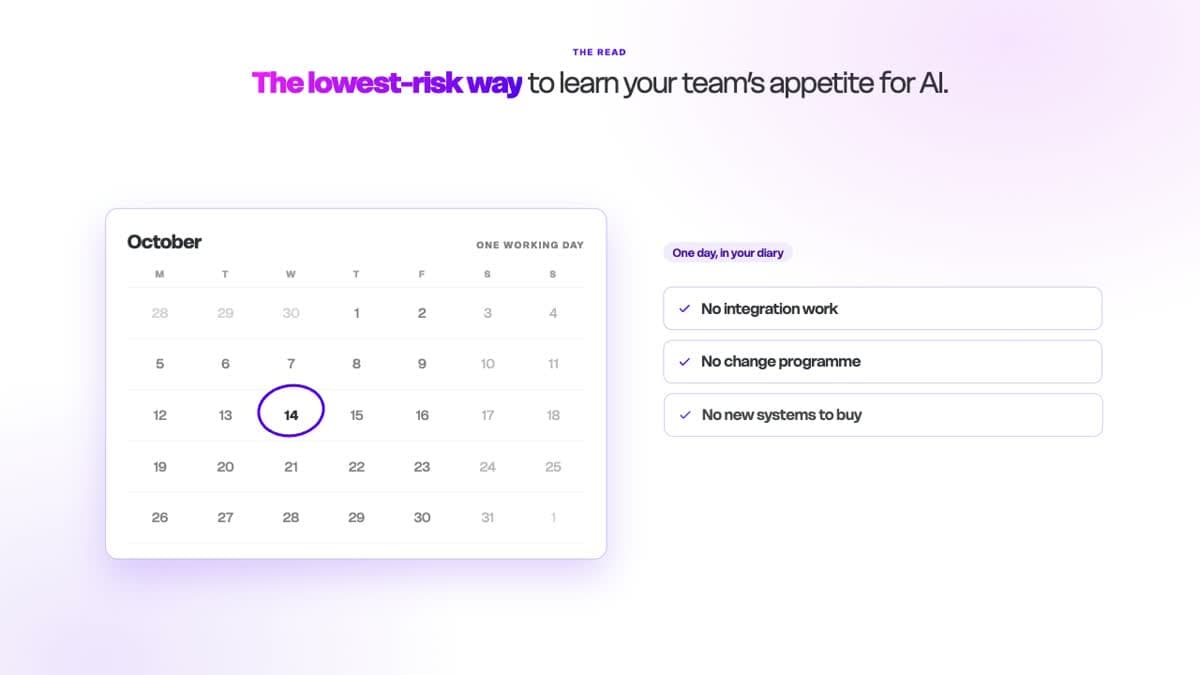
A training session lets you explore useful applications before committing to an integration project. Plan what people will try afterwards, and when you'll review it.
Decide whether your bottleneck is a skills gap, a systems gap or both.
An engaged room doesn't guarantee a changed workflow. People need time, an owner and a clear next step once the session ends.

Give each person a task to apply what they've learned, and make space for it in the working week. Otherwise client work takes priority and the practice never happens.
Useful personal prompts don't automatically become a process everyone can use. Agree how the team will share, check and document what works.
A long list of ideas can stall progress. Choose one workflow with a clear owner and a measurable result, then review it before expanding.
Show how the new process helps with a real task. Ask the team what's awkward about using it and fix that friction.
A delivered system still needs people who can use it and someone who owns its upkeep.
If only the agency understands the build, your team is dependent on it. Documentation and handover need to be part of the work from the start.
A working automation can go unused. Your team needs to know when to use it, how to check the result and where to go when something fails.
If the process changes every week, automation may be premature. Make the workflow clear enough to build before investing in a system.
Compare both approaches
Training and implementation aren't competing guarantees. Both need a clear outcome and time from the people involved.
If you already know which workflows need changing, build the system and then train the team on the work they'll actually do. A session tied to a live process gives people something concrete to practise.
If you're still exploring what's possible, training can come first. Use it to surface useful ideas, map the strongest opportunities and scope the build from there.
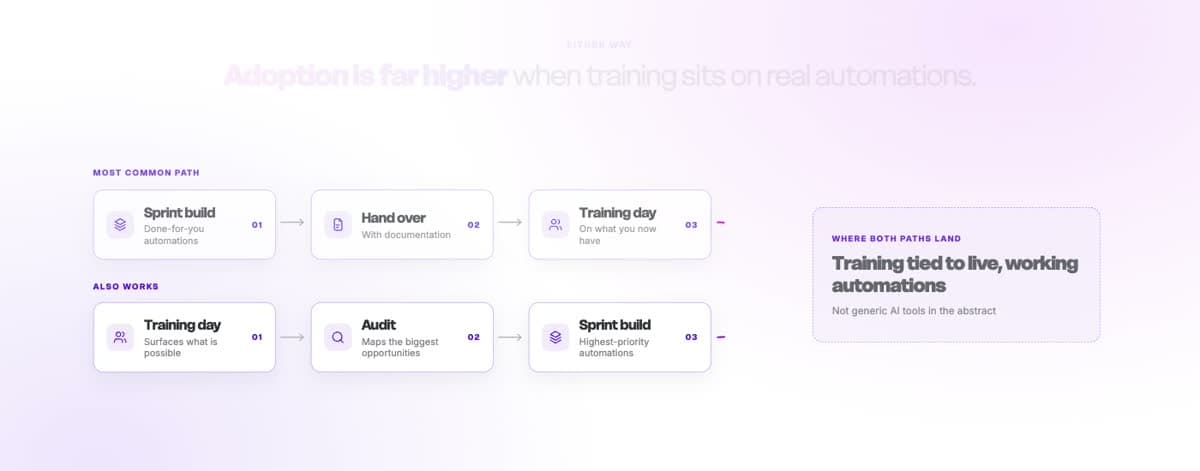
Decide whether you're missing skills, a working system or team adoption.
Choose the step that removes that bottleneck and give it a clear owner.
Document the process, practise with real tasks and review the result.
We measure success in hours returned to your firm each month. That means looking at the time your team gets back once the system is running.
Typically, the AI Operating Systems we deploy save 20% to 40% of admin time per employee within the first 90 days of launch.


A free AI readiness audit helps you work out what's holding the team back. We'll discuss which workflows need a build and where training on the tools you already have could be enough.
Reviewed onIf your question isn't answered here, book a free AI readiness call and we'll talk it through.
Not necessarily. If the goal is confidence with AI tools and better prompts, training can be the right fit. If you want to change how a particular workflow operates, you may also need implementation.
By clicking “Accept”, you agree to the storing of cookies on your device to enhance site navigation, analyse site usage, and assist in our marketing efforts. View our Privacy Policy for more information.