




Always in the room
Small questions can be answered during the working day. That day-to-day contact helps an internal hire notice problems before they become a project brief.
 Reviewed on
An honest breakdown, including when building an internal team makes more sense.
 AI development is ongoing and central to your business.There is enough work to justify the full cost of the role.You can define a focused role with room for someone to develop.You have time to manage an internal AI function.Your needs are project-based rather than continuous.You want to start with an established delivery process.The work needs several skills across strategy, building and documentation.You don't yet have a clear, sustainable role to hire for.You need documented outputs that your team can own and hand over.
At the right stage, hiring internally makes sense. A good specialist can bring continuity and business knowledge that a project-based partner can't fully match.
Small questions can be answered during the working day. That day-to-day contact helps an internal hire notice problems before they become a project brief.
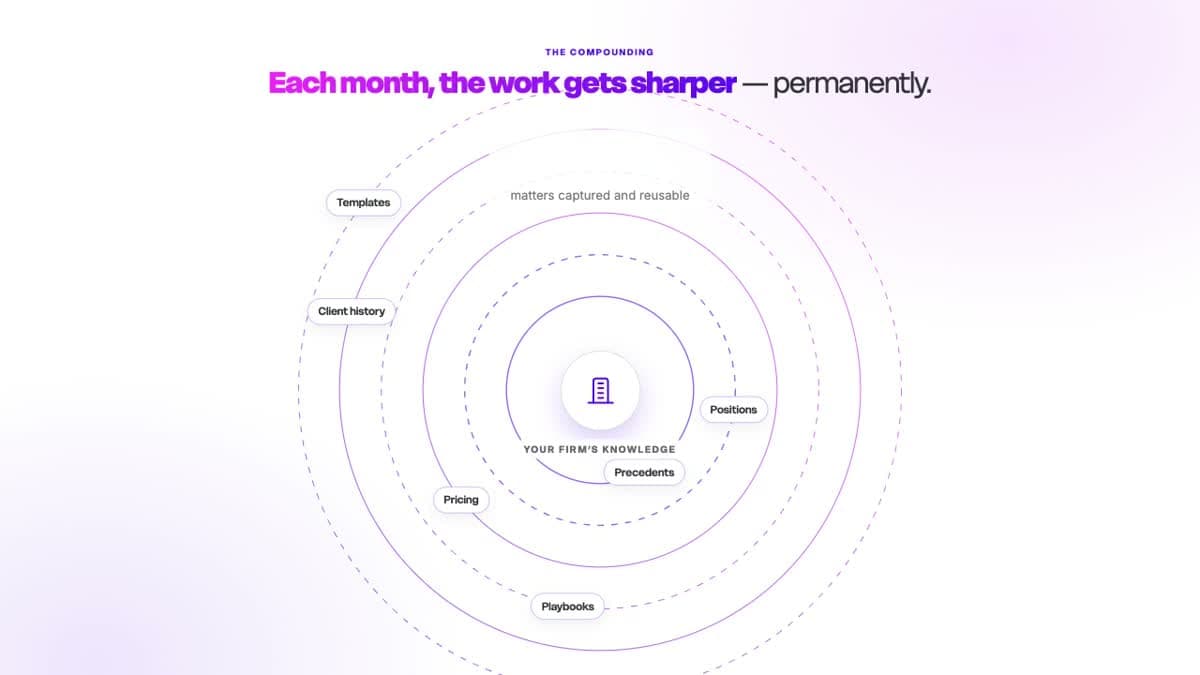
An internal hire learns your clients, systems and constraints over time. That context can make each subsequent project easier to scope.
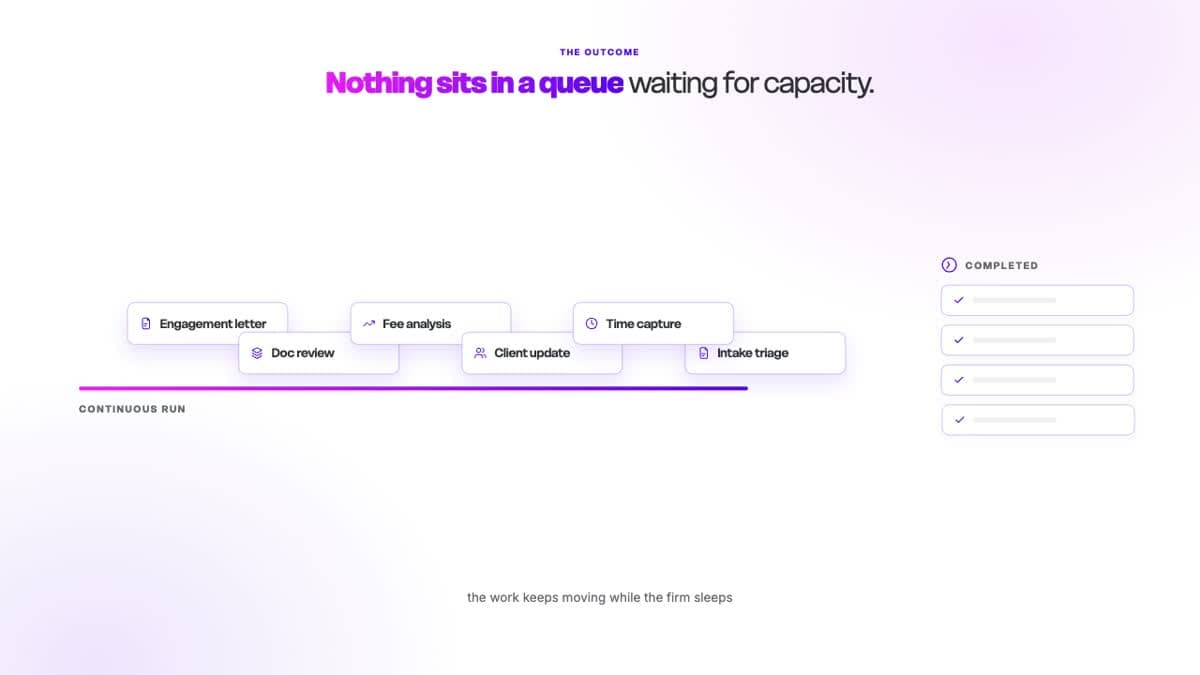
If there's a full-time backlog of AI development, a dedicated person can provide the continuity a series of separate engagements can't.
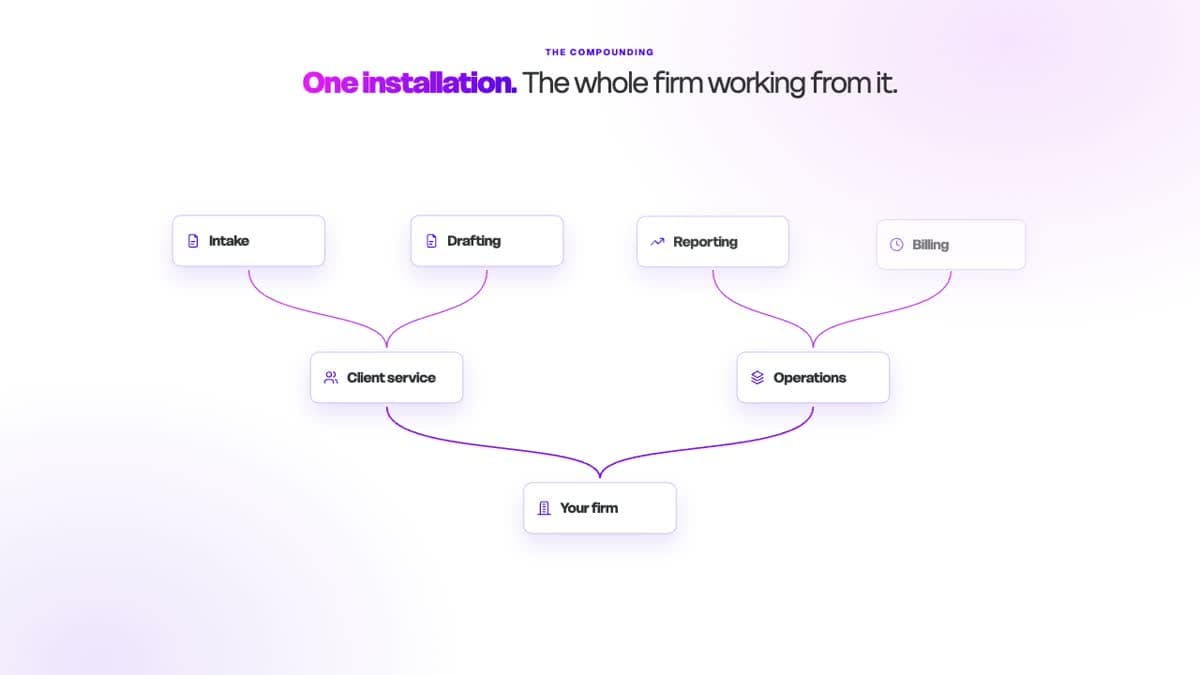
A well-defined role can become an internal function. Give the person a career path and make documentation part of the job so knowledge belongs to the business.
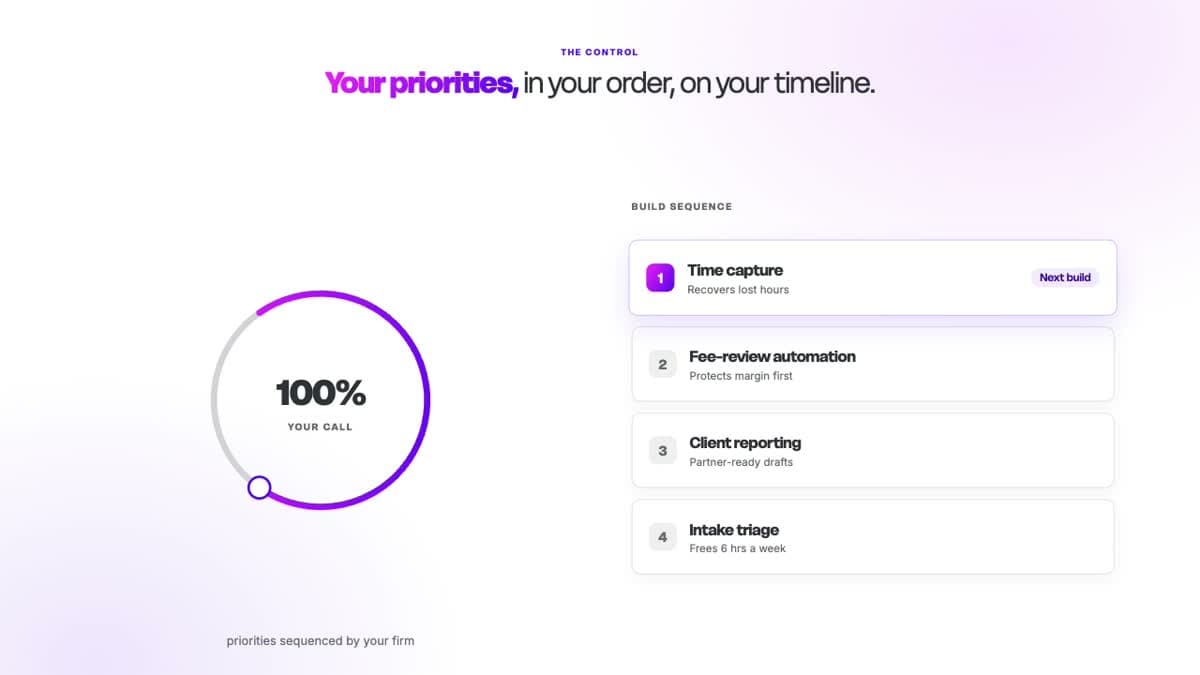
You set priorities and adjust them as the business changes. Your hire works within that ongoing plan rather than a project statement of work.
Hiring works when you have the workload, budget and management time to support the role.
Salary is the starting point. Include employment costs, recruitment and the time it takes someone to learn the business before comparing a hire with a project.
Run your own numbers with the hire vs automate calculator
Price the role you need, at the level you need. A junior builder and someone who can lead strategy and delivery are different hires.
Include employer contributions in the employment budget. Use the rates and thresholds that apply when you hire, rather than treating the salary as the whole cost.
Add the employer pension contribution that applies to the role and your scheme.
Budget for software, hardware, training and the benefits included in the offer. These are ongoing costs as well as setup costs.
Allow for agency fees if you use a recruiter, plus the time your team spends interviewing and assessing candidates.
A new hire needs time with your people and systems. Plan that onboarding work rather than assuming they're fully productive on day one.
These risks depend on how you define and support the role, not just who you hire.
Make documentation and handover part of the job. If one person is the only one who understands a system, their absence can stop work.
A focused role, useful tools and a clear career path matter alongside salary. Be honest about the work and support you can offer.
Strategy, integration work, governance and training need different skills. Decide which ones the role owns and where they'll get support.
An early tool choice can affect later work. Review architecture and priorities before committing, whether an employee or a consultant is leading the build.
Compare both approaches
Use your own salary, employment and project figures. The best fit depends on the workload and the responsibilities each option covers.
Hire when AI work is continuous, the role is clear and there is enough management support to make it successful. Revenue alone doesn't tell you whether you need a full-time specialist.
You can also build internal capability in stages. Start with a documented foundation, help your team use it and hire once you know what the ongoing role needs to own.
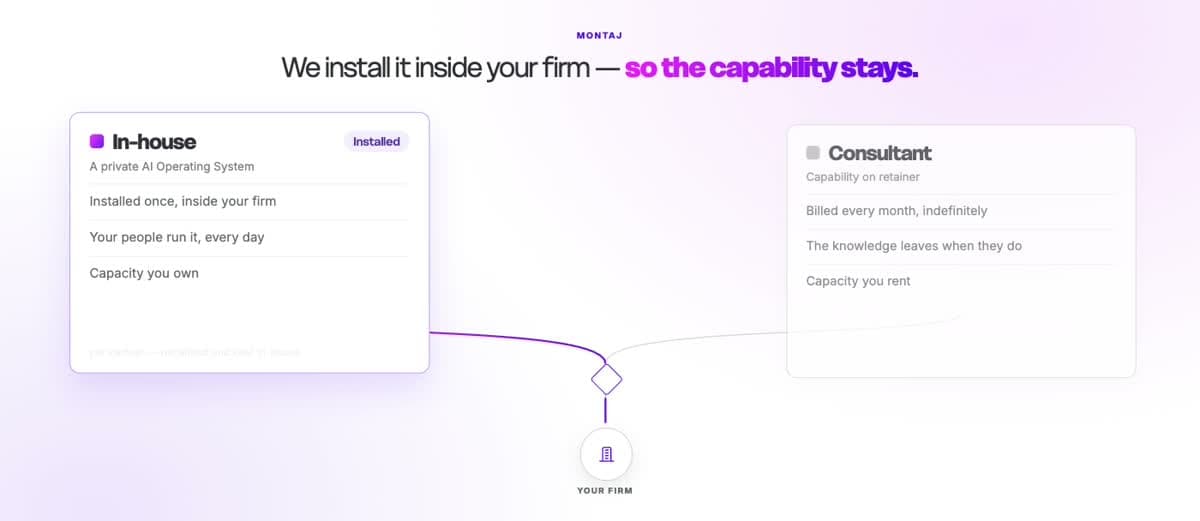
A consultant builds the foundation, documents it and hands over the outputs.
Your team learns how to use the system and owns routine checks and maintenance.
When the workload supports a role, hire onto a documented foundation.
We measure success in hours returned to your firm each month. That means looking at the time your team gets back once the system is running.
Typically, the AI Operating Systems we deploy save 20% to 40% of admin time per employee within the first 90 days of launch.


Bring the work you're considering to a free AI readiness audit. We'll discuss whether it looks like a defined project or an ongoing role, and what your team would need to own either way.
Reviewed onIf your question isn't answered here, book a free AI readiness call and we'll talk it through.
A technical co-founder may have the skills, but implementation competes with product, infrastructure and leadership for their time. Work out whether they have capacity and whether this is the best use of it.
By clicking “Accept”, you agree to the storing of cookies on your device to enhance site navigation, analyse site usage, and assist in our marketing efforts. View our Privacy Policy for more information.