 Reviewed on





Case study · Custom software

How we built a property deal sourcing platform for Q Real Estate
Q Real Estate finds development sites for SME property developers. Montaj replaced three separate data subscriptions and a spreadsheet with one in-house deal sourcing platform: a single searchable view of close to 50,000 live UK construction projects, with duplicate records removed and every search shareable as a link.
- Client
- Q Real Estate
- Sector
- Property and land acquisition
- Services
- Process mapping, data architecture, custom software
- Built with
- Supabase, n8n, Claude, Vue

The business and the brief
Q Real Estate works as an outsourced land acquisition team for SME property developers. Smaller developers can't justify a full in-house land team, so Q Real Estate finds and qualifies development sites for them, many of them before they reach the open market.
The whole proposition rests on property deal sourcing: spotting the right site, for the right developer, before anyone else does. The brief was to give a small team the tools to do that across the whole of the UK, without the cost of a traditional land department.
Why the data mattered
The research behind every site sat in three places. Construction and planning data came from one platform, land and ownership data from another, and company checks from a third. The team searched each one separately and copied anything promising into a spreadsheet.
- 01Construction and planning data
- 02Land and ownership data
- 03Company checks
- 04A spreadsheet
That way of working puts a ceiling on growth. Every new developer client means more searching, more copying and more chance of missing a site. The main construction feed also creates a fresh record each time a project's planning status changes, so the same site could appear several times over.
A small team doing the job of a much larger one
An in-house land team for a developer typically costs hundreds of thousands of pounds a year in salaries and software. Q Real Estate's model only works if a small team can do the job of a much larger one.
What we built
We followed the M.A.P. Method: map the process, automate the data, then turn it into a product the team owns.
- 01
Map:
how a site actually gets found
- 02
Automate:
one database, one record per site
- 03
Productise:
a search tool built around the developer's brief
Map: how a site actually gets found
We sat down with the founder and walked through how a site gets found today, step by step, across each tool. That produced a data map and a set of user stories: what the team searches for, which fields matter, how a developer describes the site they want, and where the duplicates come from.
Automate: one database, one record per site
We built one central database in Supabase. Construction and planning data flows in through a scheduled sync that only pulls what's changed. Records are matched on address, title number and UPRN, so one site is one record however many times its planning status moves. n8n runs the pipelines, and Claude enriches each record so it's easier to search and compare.
Sources
- Construction and planning data
- Land and ownership data
- Company checks

Sync and de- duplication
Changes only. Matched on address, title number and UPRN. Run by n8n.
Central database
Supabase. One record per site, enriched by Claude.
Secure portal
Sign-in required. Search, shortlist, share.
Productise: a search tool built around the developer's brief
On top of the database sits a secure portal the team signs in to. The filters mirror the way a developer describes a site: "residential, £5m and up, within 20 miles of London, starting next year".
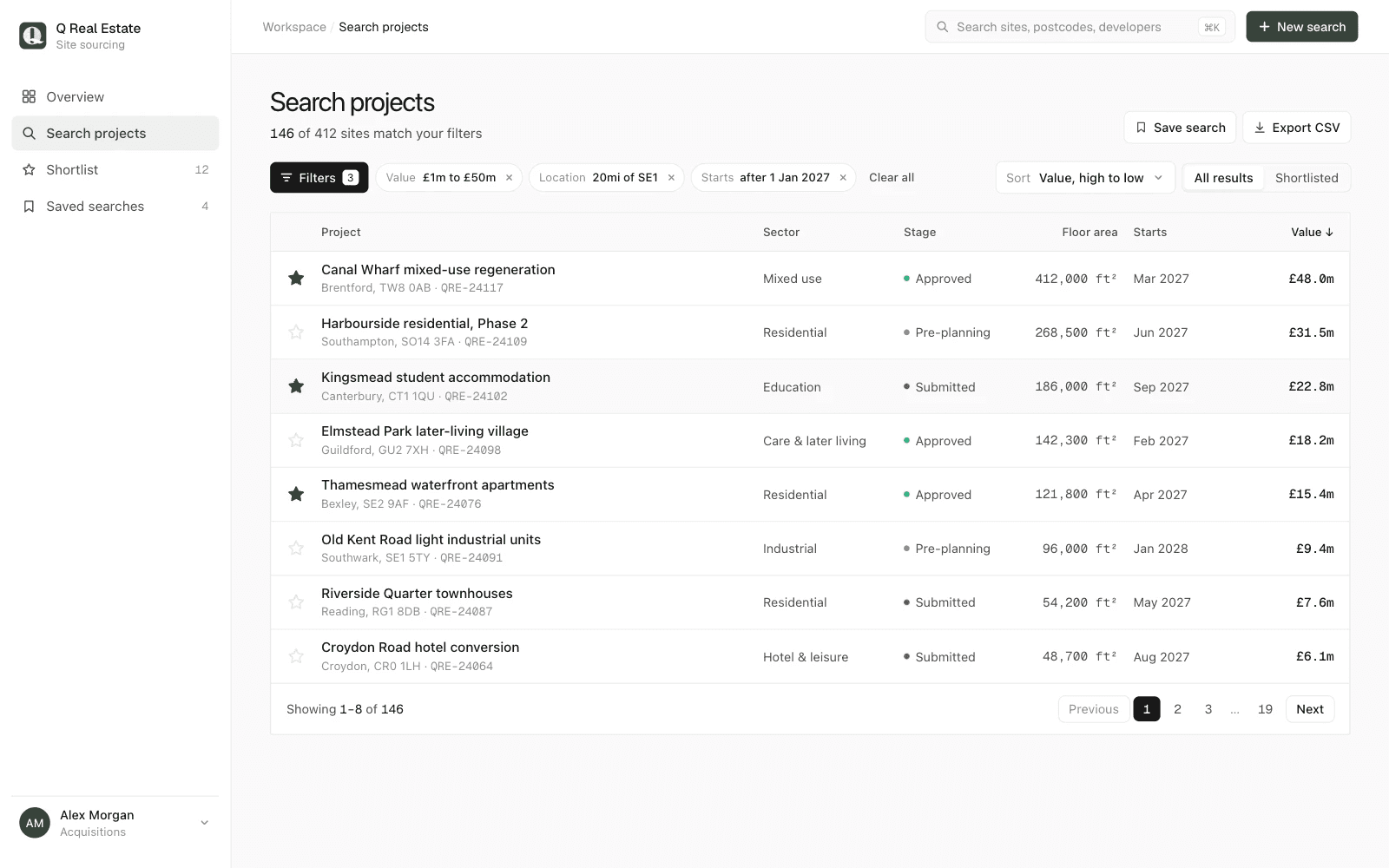
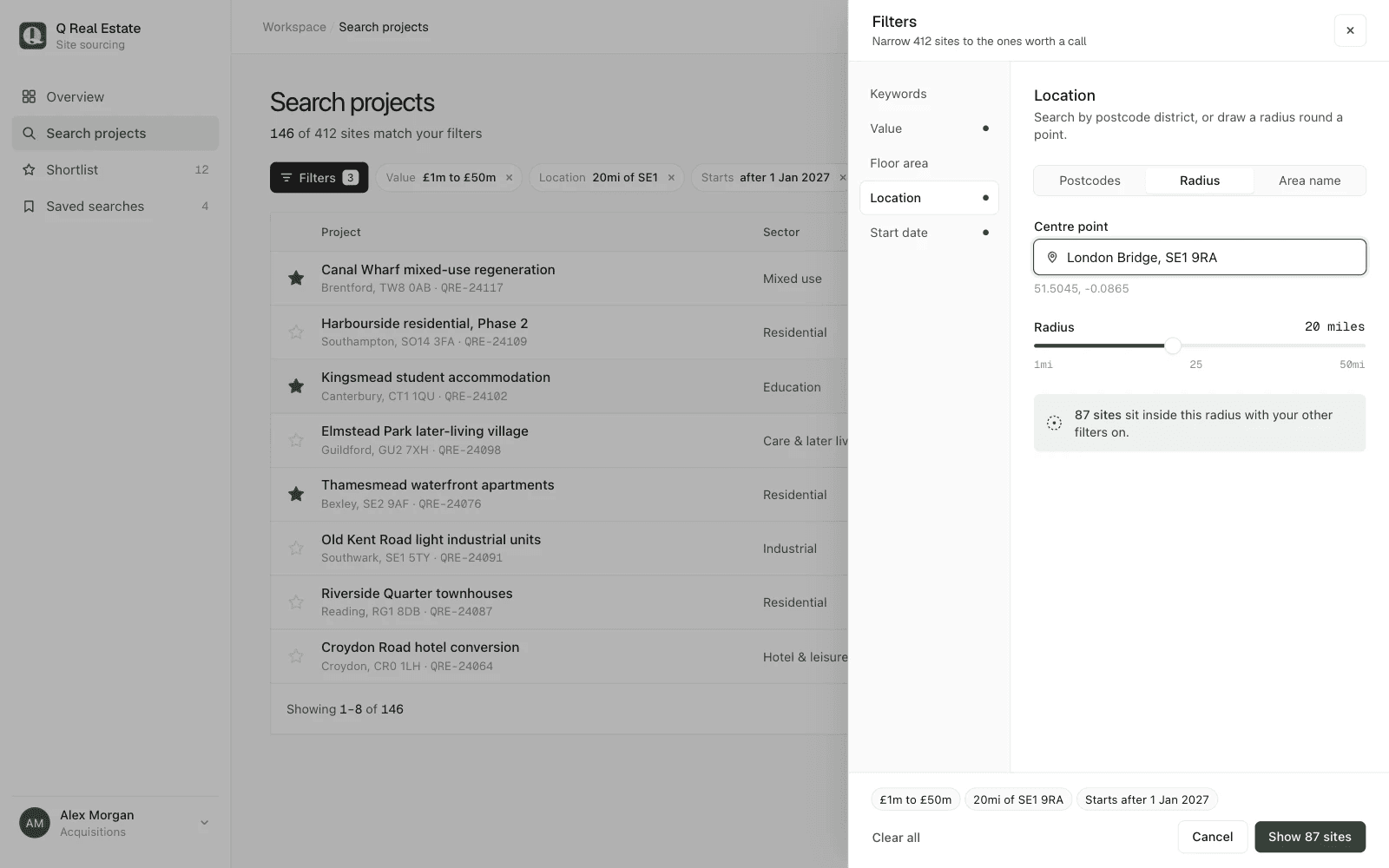
The team can search by keyword, matching any or all terms, and filter by value, floor area and project start date. Location works three ways: a list of postcodes, a radius in miles around a point, or an area name. Results sort by value, floor area or date published, so the newest or biggest opportunities come first.
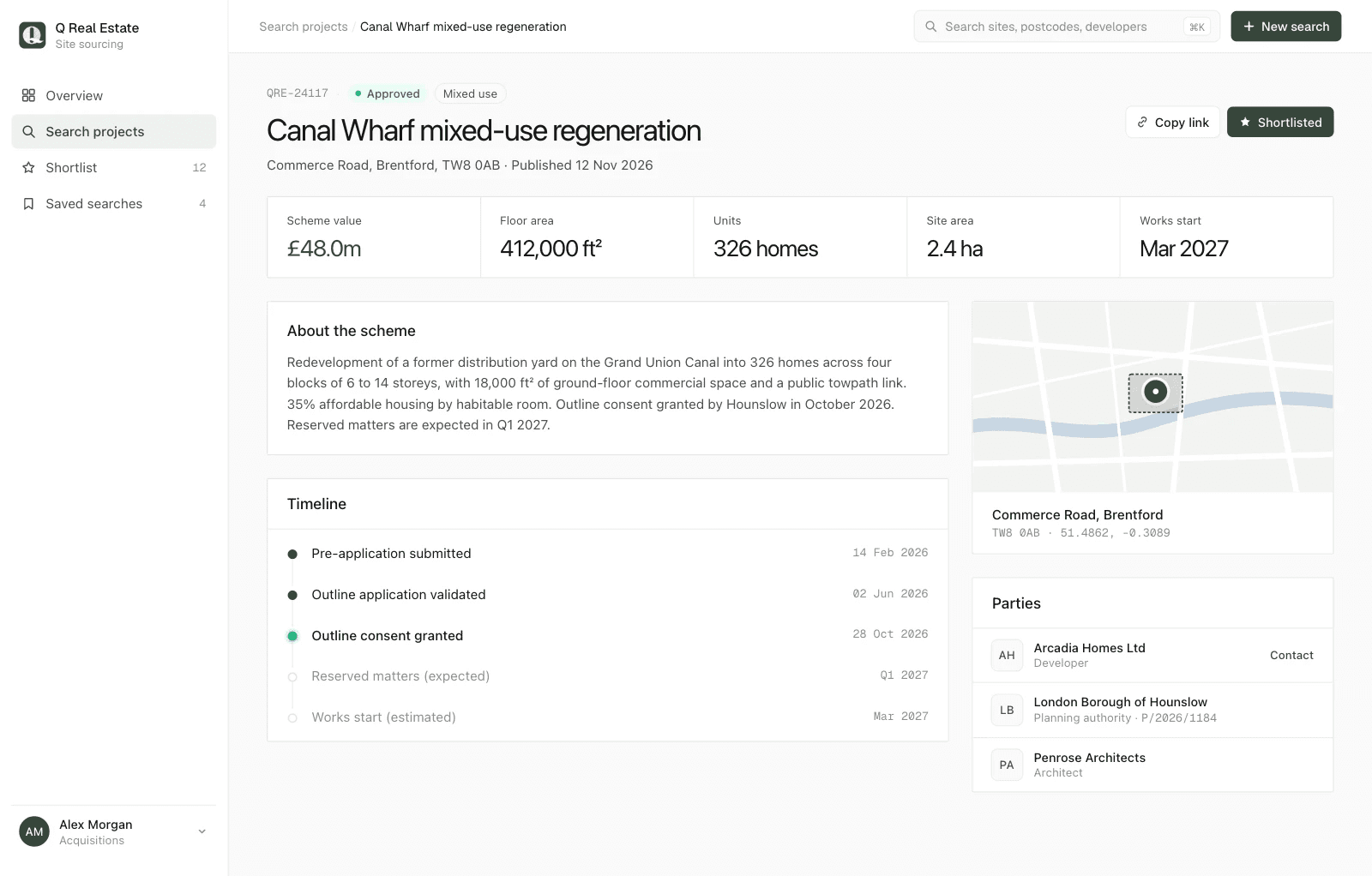
Any project opens into a full record, and the page remembers the search behind it, so "back" returns to exactly the same results.
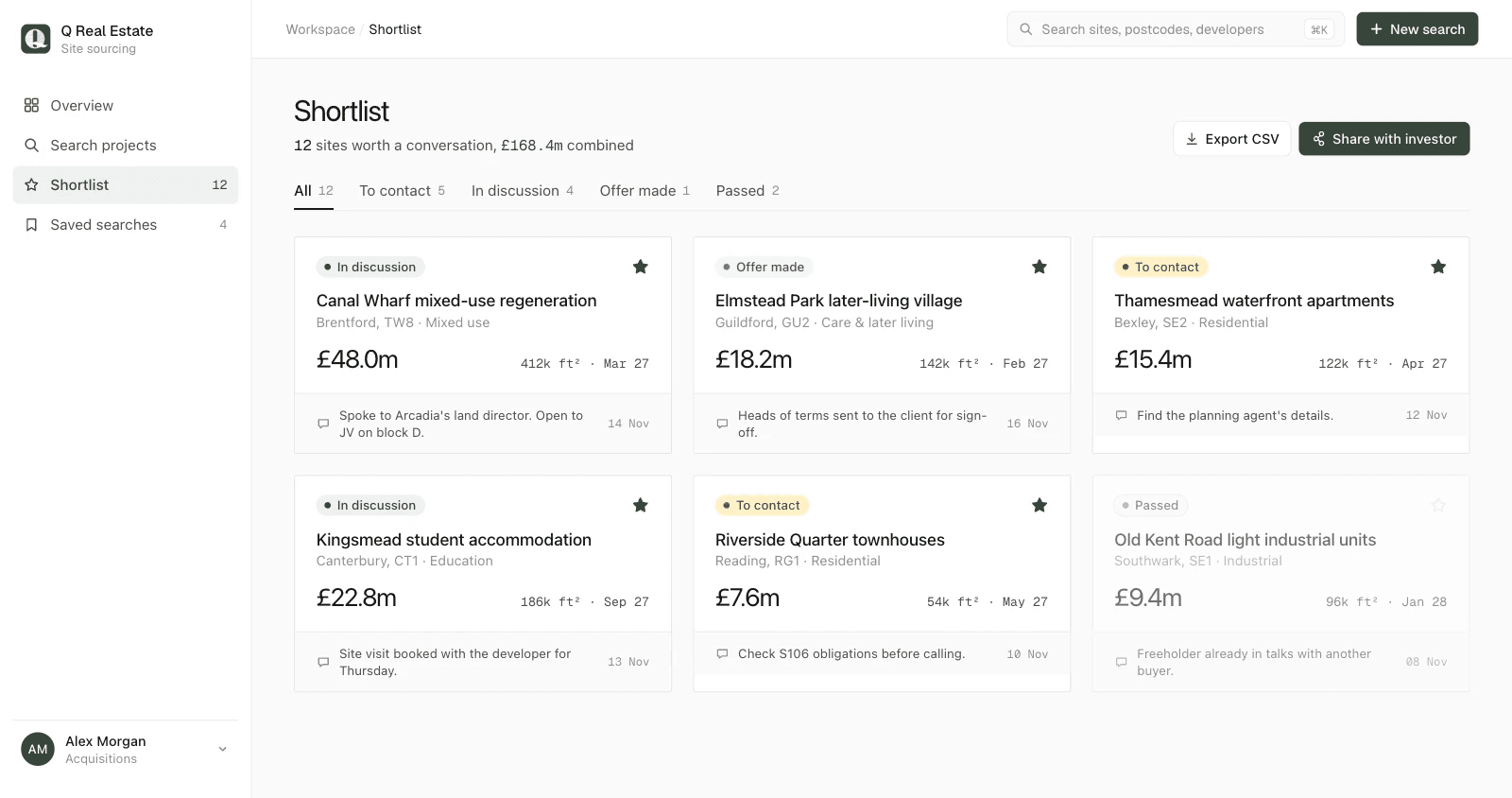
Sites worth a conversation go on a shortlist. Every search lives in its own link, so a filtered set of sites can go to a developer in one message.
Sign-in is required throughout, every request carries the user's token, and the data feed's credentials never reach the browser.
What changed
The land team gained a single searchable view of close to 50,000 live UK construction projects, with duplicates resolved and every record in a consistent format. Searches that meant hopping between three subscriptions and a spreadsheet now happen in one screen, on a desktop or a phone.
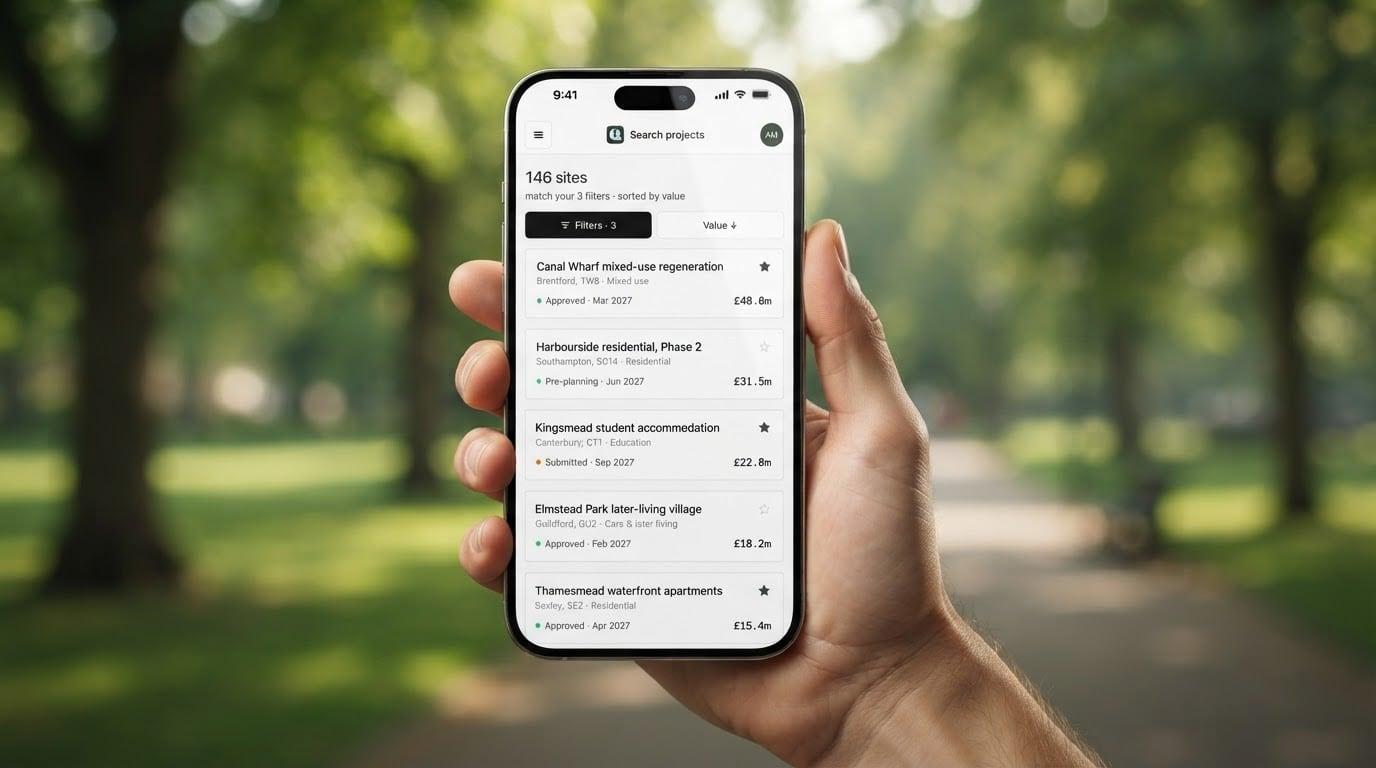
We designed the system so the same back-office team could handle five times the client load without adding headcount, because the searching and data entry no longer grow with every new client. A client-facing version, giving developers their own view of shortlisted sites, was mapped as the next phase.
Questions about the project
- 01
What is a property deal sourcing platform?
It's software that pulls development opportunities from several data sources into one place, so a team can search, filter and shortlist sites against a buyer's brief instead of checking each source by hand. Q Real Estate's version is private to its team and built around how its developer clients describe the sites they want.
- 02
Why build a portal rather than use the data platforms directly?
Each platform holds part of the picture. The value is in joining them, removing duplicates and searching the lot at once. A business-owned portal does that and keeps the logic and the data in-house, rather than renting the search from another subscription.
- 03
What does "five times the client load" mean?
It's the capacity the system was designed for: the same team serving five times as many developer clients, because the searching and data entry no longer scale with headcount. It's a design target, not a measured result.


From first enquiry
to won work
Want your website and search marketing to support the same commercial goal? Talk to Montaj about the route from first enquiry to won work, and where that route needs improving.
Talk to usReviewed onMore client stories
See what AI and automation have done for firms like yours.

£110k of pipeline hiding in data they already owned
How a live AI audit surfaced £110k of dormant pipeline inside GRS Global's own network, and the custom tool we built to work it.
Read more
A full month's revenue in a single week
How we helped Omnia Health Group generate a month's revenue in seven days by reactivating dormant data and automating follow-up.
Read more
Launch to six figures in six months
How we helped Search For Hire build a full acquisition system and reach six figures in revenue within six months, without leaning on the founder's personal brand.
Read more