 Reviewed on





Case study · Lead Generation

How we built a salary benchmarking portal for GRS Global
GRS Global is a London recruitment agency that specialises in freight forwarding and logistics. Montaj built the GRS Client Portal, a branded salary benchmarking platform that gives hiring managers live, role-specific pay data for the UK freight market. It keeps GRS in front of its clients between vacancies, and every bespoke benchmark request starts a sales conversation.
- Client
- GRS Global
- Location
- London
- Services
- Custom Software
- Roadmap
- M.A.P. Method

The business and the brief
GRS Global places people into freight forwarders across the UK, from air freight operators at Heathrow to branch managers and sales leads. It's a niche, relationship-led business: more than 600 placements and 75 clients, run by founders who came up through larger agencies.
- 600+ placements
- 75 clients
- Freight and logistics only
Most recruiters only hear from a client when there's a role to fill. Between vacancies the relationship goes quiet, and the next brief can just as easily go to a competitor. GRS wanted a reason for hiring managers to come back every week, and a way to turn that attention into new business.
GRS was already working with Montaj on AI and automation. The portal was the next build in that relationship.
Why salary data mattered
Pay is the first question every freight hiring manager asks, and the one they're least sure about. Offer too little and the best candidates walk. Offer too much and the margin goes. Generic salary surveys rarely break freight forwarding down by role and location, so most firms set a number by feel.
GRS already had the answer. Years of placements had given them a detailed picture of what each role pays, region by region, including holiday, bonus and the extras that tip a candidate's decision. But that knowledge lived in a spreadsheet and in the founders' heads, and clients only saw it when they asked on a call.
The brief was to turn that knowledge into a product: something a hiring manager would sign up for, use without help, and come back to.
What we built
We followed the M.A.P. Method: map the process, automate the data, then turn it into a product the client owns.
- 01
Map:
what a hiring manager needs to decide
- 02
Automate:
GRS's data, updated by GRS
- 03
Productise:
a portal that does the selling
Map: what a hiring manager needs to decide
We worked through how GRS's clients make a hiring decision: which roles they recruit for, how they describe them, and what they need to see before they set a salary. That gave us the shape of a benchmark (a low, average and high figure for each role and location, plus holiday, bonus and the "edge" that wins candidates) and the four things the portal had to do: benchmark, inform, advise, and take requests.
Automate: GRS's data, updated by GRS
We built one database in Supabase, hosted in the EU, that holds more than 400 role and location benchmarks drawn from GRS's own placement data. GRS run it from their own admin panel. They can edit a single figure in place or bulk-update the lot from a spreadsheet, and changes go live straight away, with no developer involved and the data staying theirs.
The same panel lets GRS choose which in-demand roles appear first on the benchmark tool, and post market alerts that show on every client's dashboard.
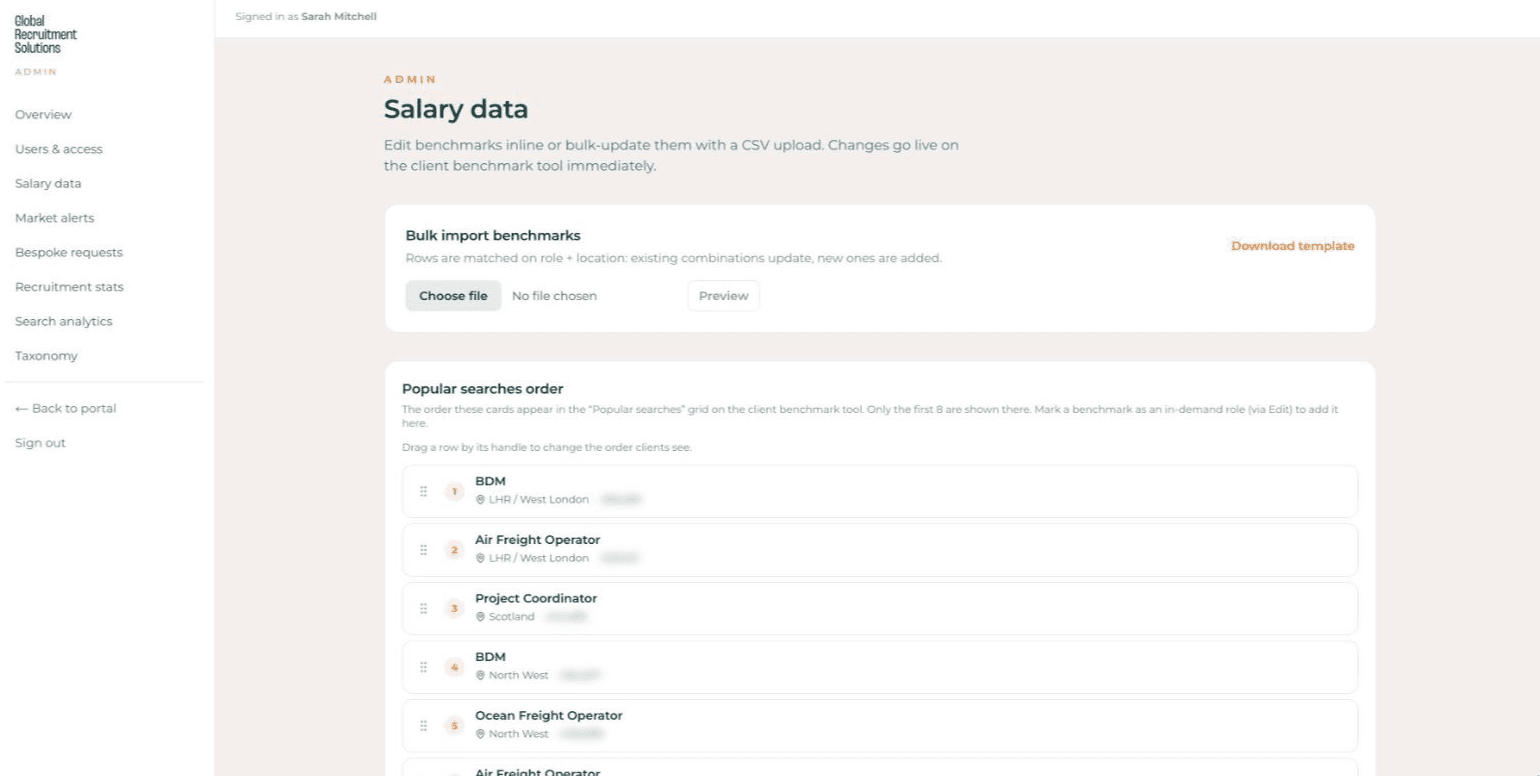
Productise: a portal that does the selling
The portal sits on its own GRS-branded address. Anyone can see what's inside from the public page, including a sample benchmark with the figures hidden, but the live data needs a free account. Sign-up asks for a company email and sends a one-time link, so there are no passwords to manage and every account belongs to a named person at a real business.
- 600+ placements
- 75 clients
- Freight and logistics only
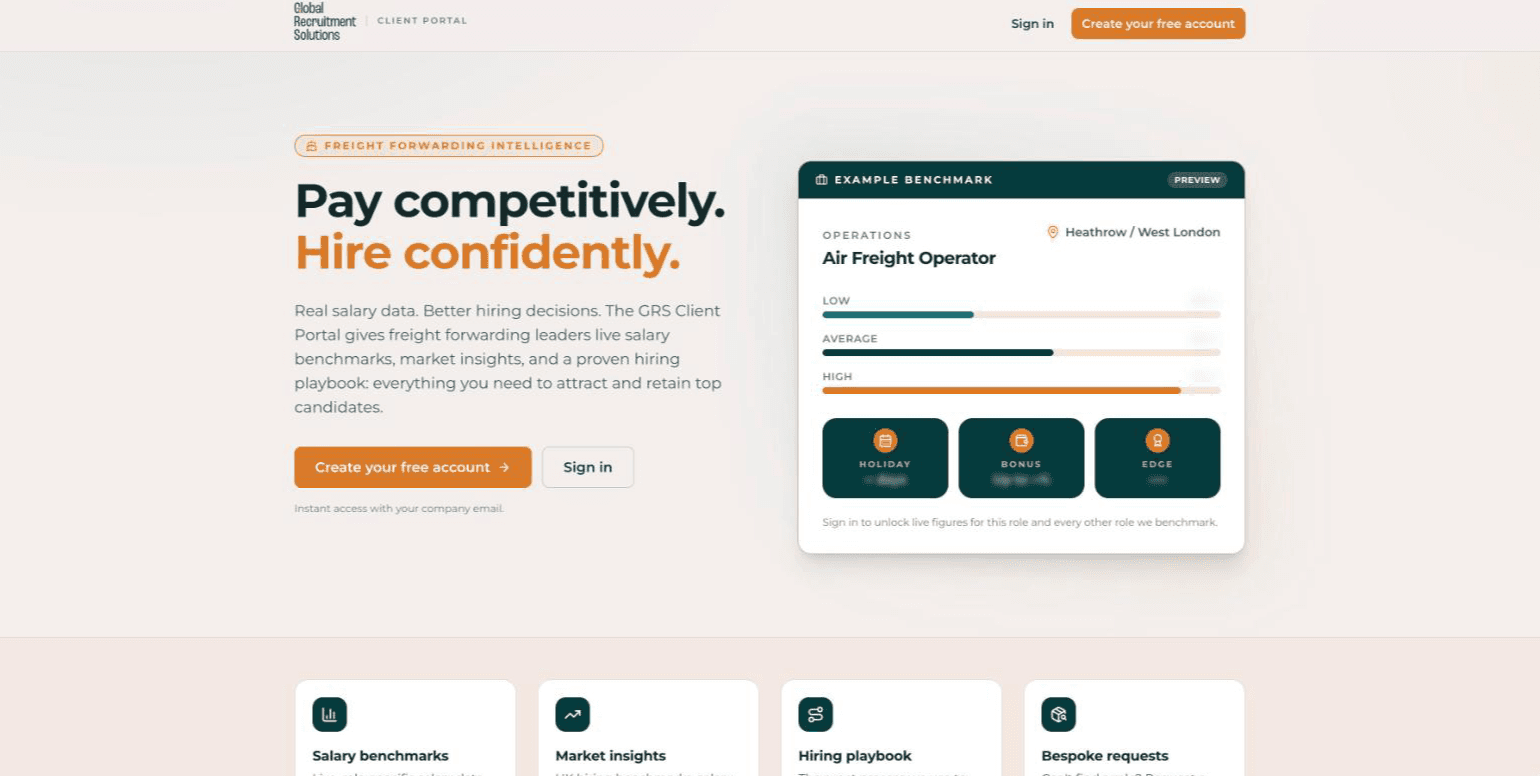
Inside, hiring managers get four things.
- Salary benchmarks
- Market insights
- A hiring playbook
- Bespoke requests
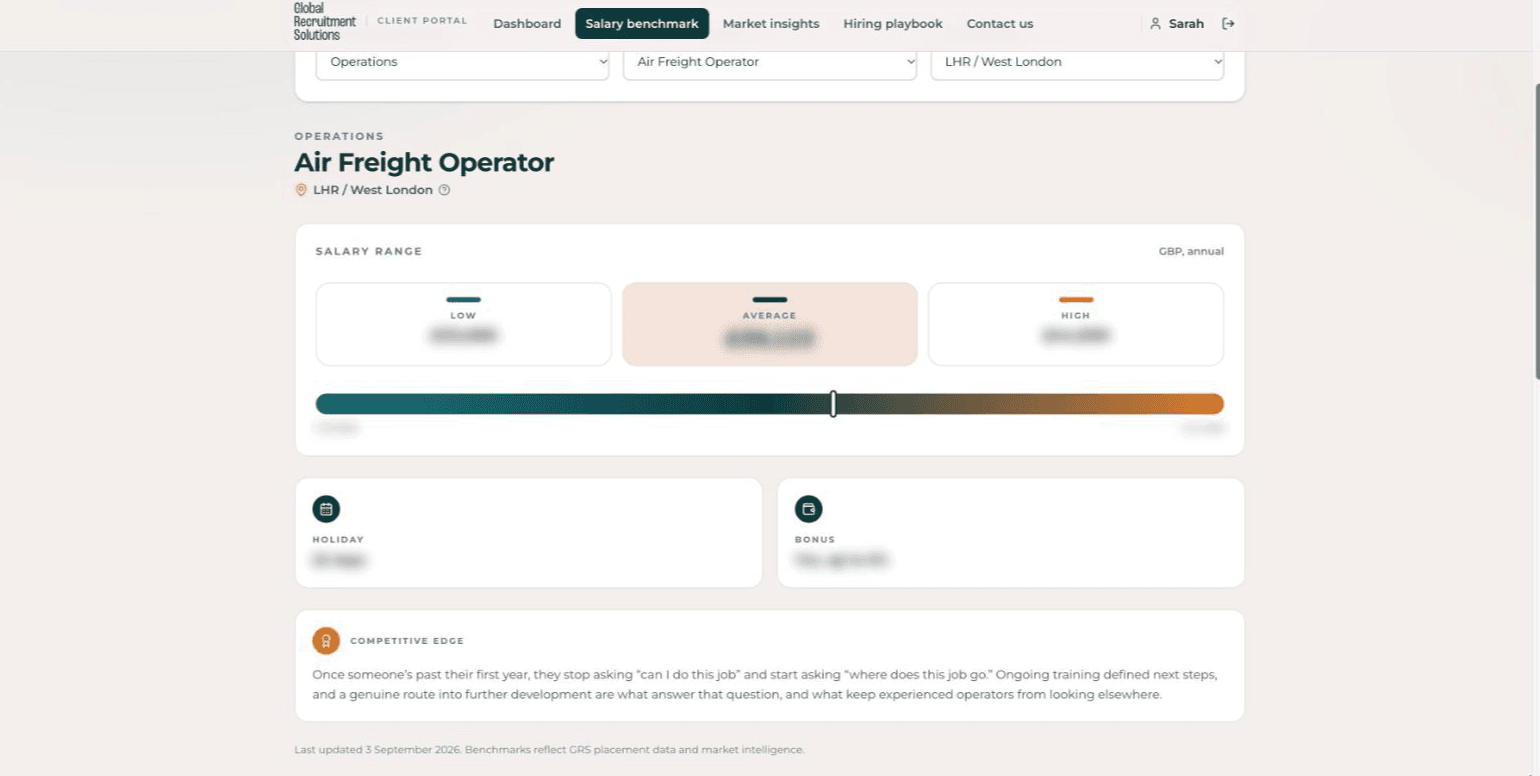
Salary benchmarks. Pick a role category, a specific role and a UK region, and the portal shows the low, average and high salary, plus typical holiday, bonus and the "competitive edge" that helps win candidates for that role.
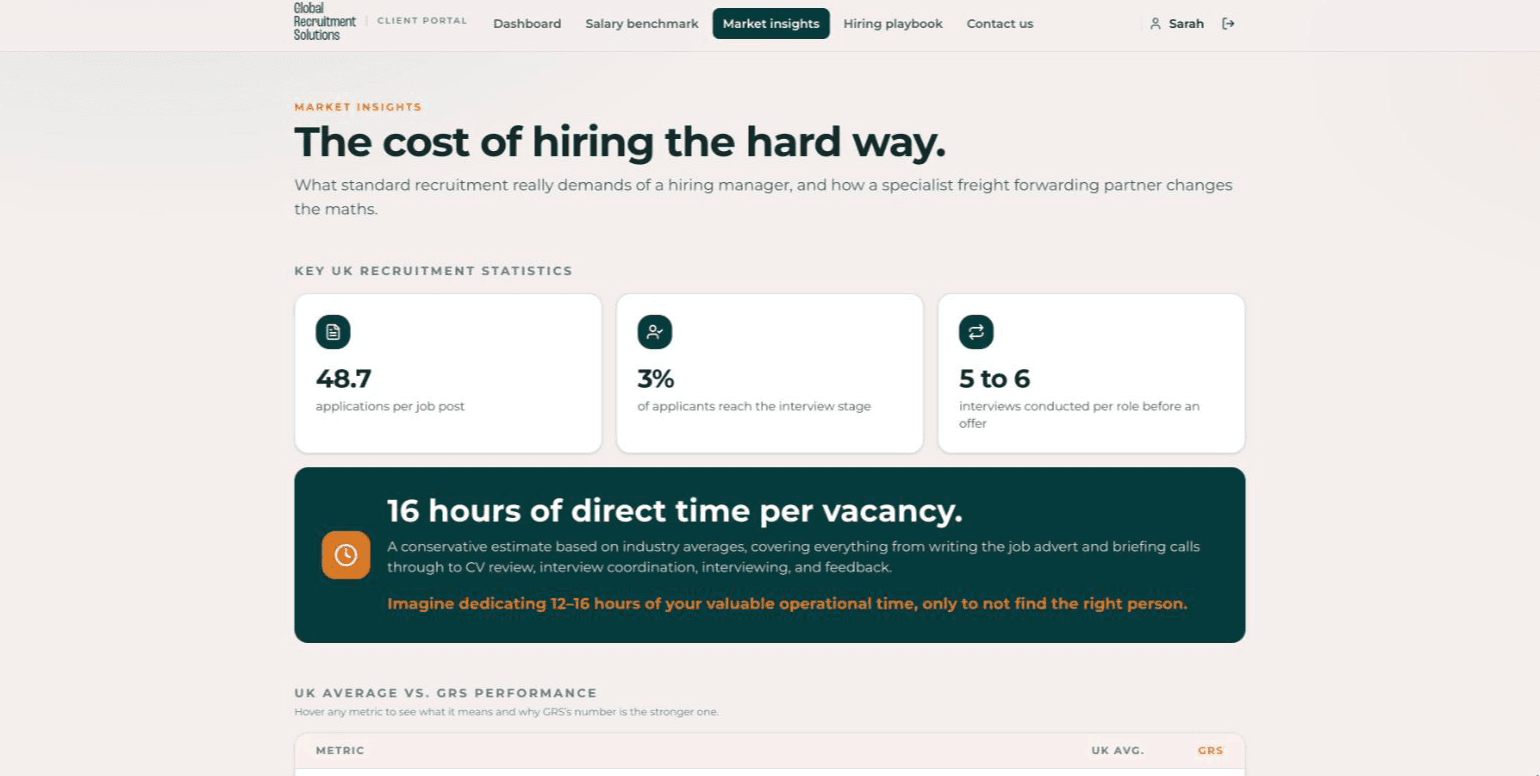
Market insights. What standard recruitment really costs a hiring manager, in applications per advert, interviews per role and hours spent per vacancy, set against how GRS perform. Alongside it sit the latest freight industry alerts.
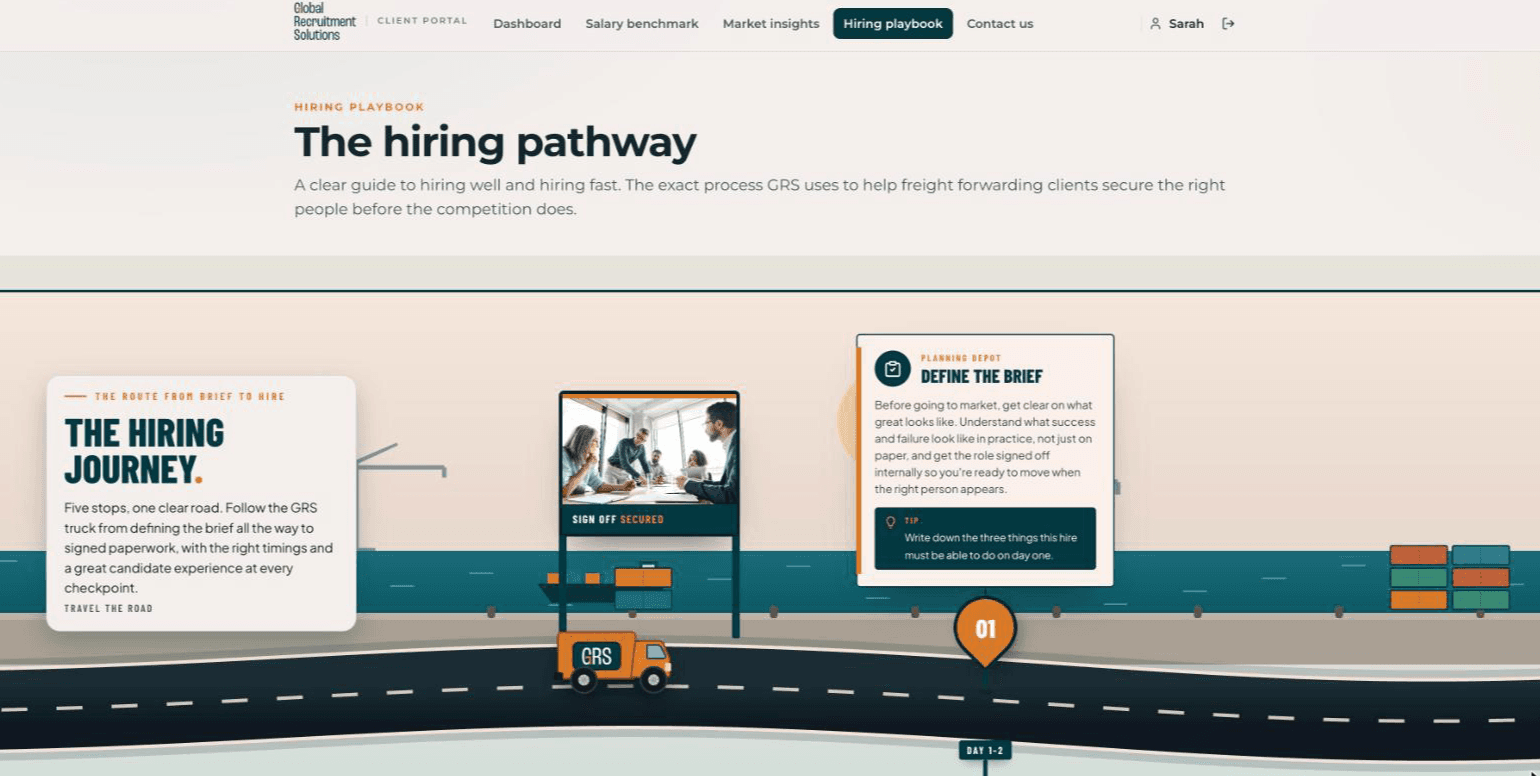
A hiring playbook. The hiring pathway GRS follow, drawn as a five-stop road from defining the brief to signed paperwork, with timings and tips at each stop. It's shared openly, and it positions GRS as an adviser, not just a supplier of CVs.
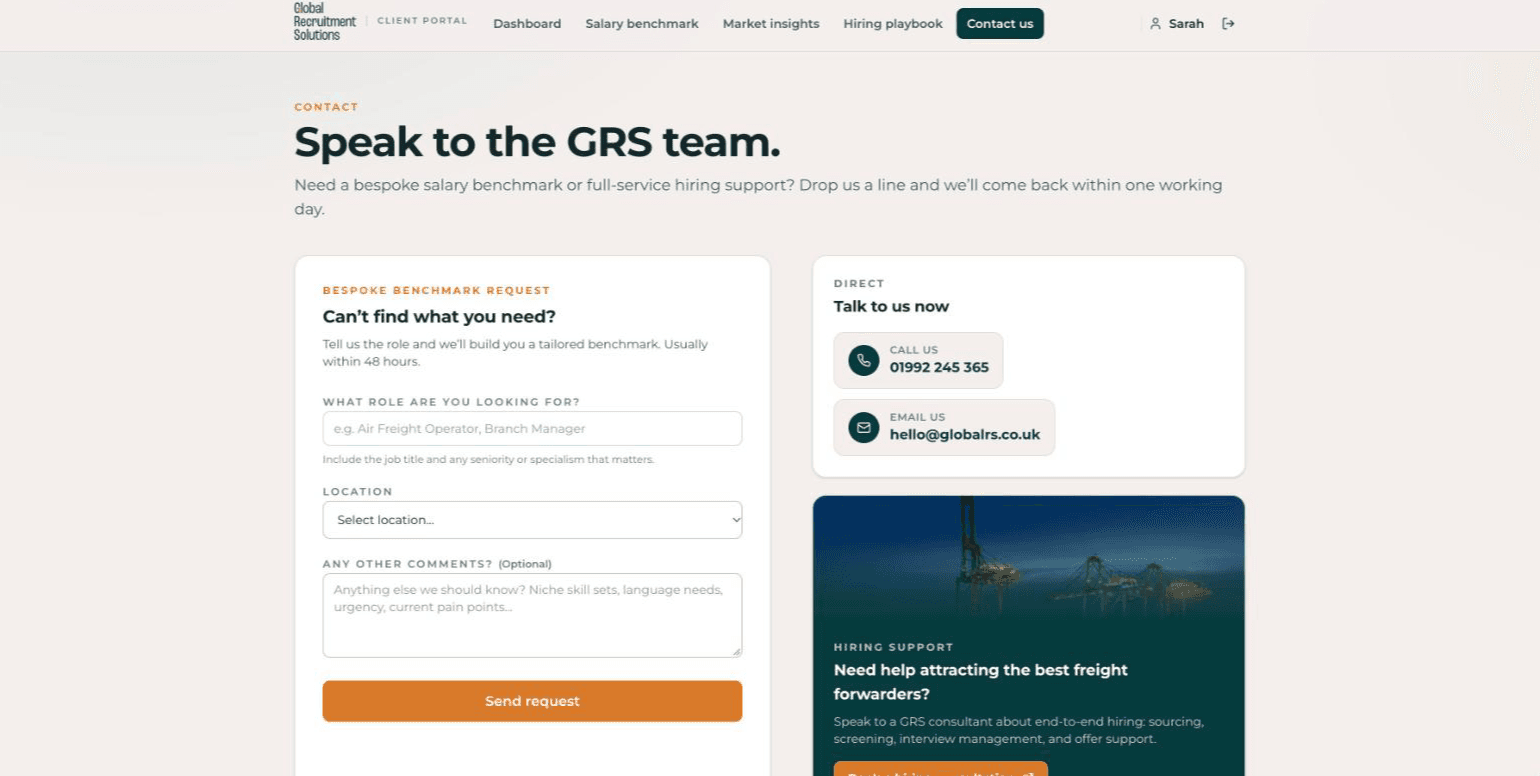
Bespoke requests. If a client can't find a role or region, they describe what they need and GRS build a tailored benchmark, usually within 48 hours. The request lands straight in the GRS admin panel.
What changed
GRS now have a reason to be in a client's week when there's no vacancy on the table. Hiring managers log in to check a salary, read the latest market trends or look at the playbook, and GRS stay front of mind for the next brief.
The bespoke requests have become a lead source in their own right. Each one tells GRS exactly which role a business is thinking about, often before it reaches a job board. The team replies with the benchmark and a conversation, and those conversations have lifted both lead capture and the number of calls GRS book.
- 01RequestA hiring manager asks for a role or region that isn't listed.
- 02GRS benchmarkGRS reply with tailored data, usually within 48 hours.
- 03Call bookedThe benchmark opens a conversation.
- 04Role briefedThe role comes to GRS.

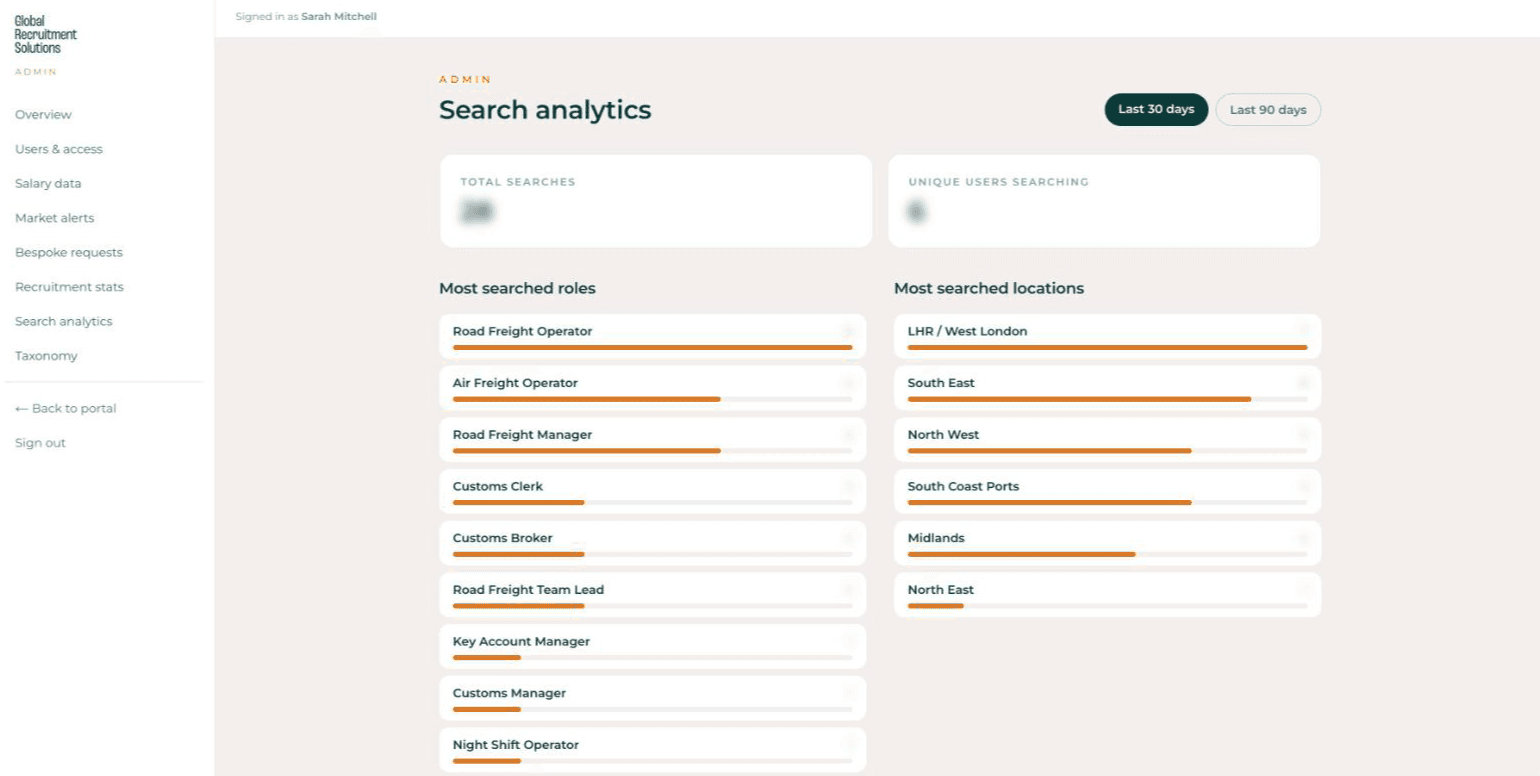
The searches tell a story too. GRS can see which roles and regions their clients look up most, so they know where demand is building before a brief arrives, and which conversations to start.
Every sign-up is a named hiring manager at a freight forwarder, so the portal builds a qualified list as it goes, rather than anonymous web traffic. GRS also use the portal in their own pitches: it shows prospective clients what working with them looks like before a contract is signed.
in their words
Montaj created a plan & structure for us to use AI efficiently which created so many valuable and attainable leads,
which has seen huge growth within our business over the last 6 months.”
Questions about the project
- 01
What is salary benchmarking?
Salary benchmarking compares the pay for a role against what the market pays for the same job in the same area. It helps an employer make an offer that wins the candidate without overpaying. GRS's version is specific to freight forwarding and logistics, broken down by role and location, and includes holiday, bonus and other benefits.
- 02
Why would a recruitment agency give salary data away?
Because it brings clients back between vacancies. The data is free behind a sign-up, so GRS learn who is interested, and the bespoke requests tell them which roles are coming before they are advertised. The portal is a lead generation tool that also happens to be useful.
- 03
Who keeps the data up to date?
GRS do. They edit figures in place or upload a spreadsheet through their admin panel, and changes go live straight away, without a developer. The portal runs on GRS's own accounts, so they own the platform and the data.


Bring a custom build
to your business
If your business runs on a stack of tools that don't talk to each other, one system built around how you work can take hours of admin off your team every week. Or read how we built Q Real Estate's property deal sourcing platform and surfaced £110k of dormant pipeline for GRS Global.
Explore AI ImplementationReviewed onMore client stories
See what AI and automation have done for firms like yours.

£110k of pipeline hiding in data they already owned
How a live AI audit surfaced £110k of dormant pipeline inside GRS Global's own network, and the custom tool we built to work it.
Read more
A full month's revenue in a single week
How we helped Omnia Health Group generate a month's revenue in seven days by reactivating dormant data and automating follow-up.
Read more
Launch to six figures in six months
How we helped Search For Hire build a full acquisition system and reach six figures in revenue within six months, without leaning on the founder's personal brand.
Read more